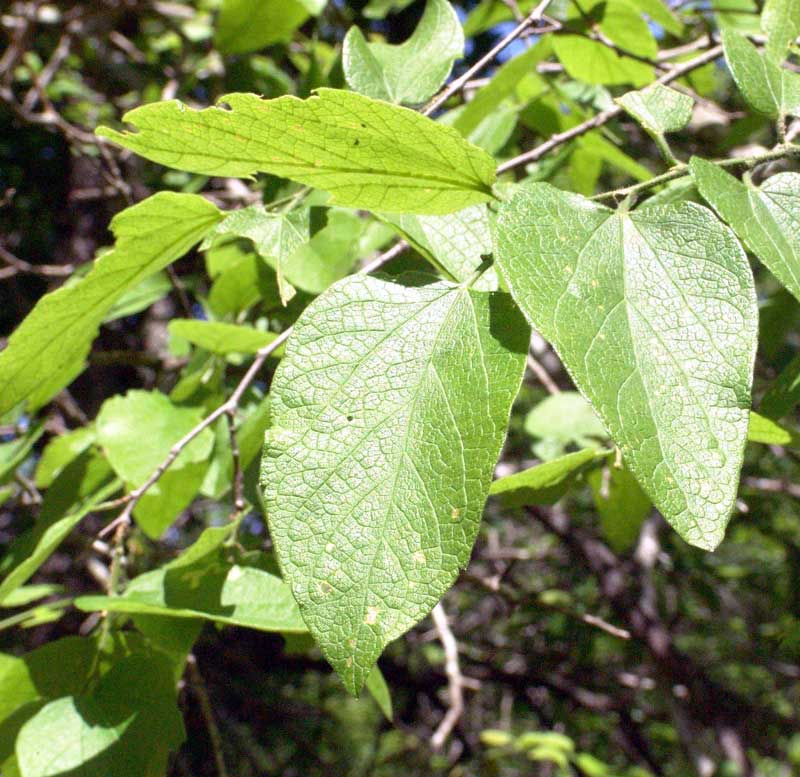
COMMON BUCKTHORN
Rhamnus cathartica
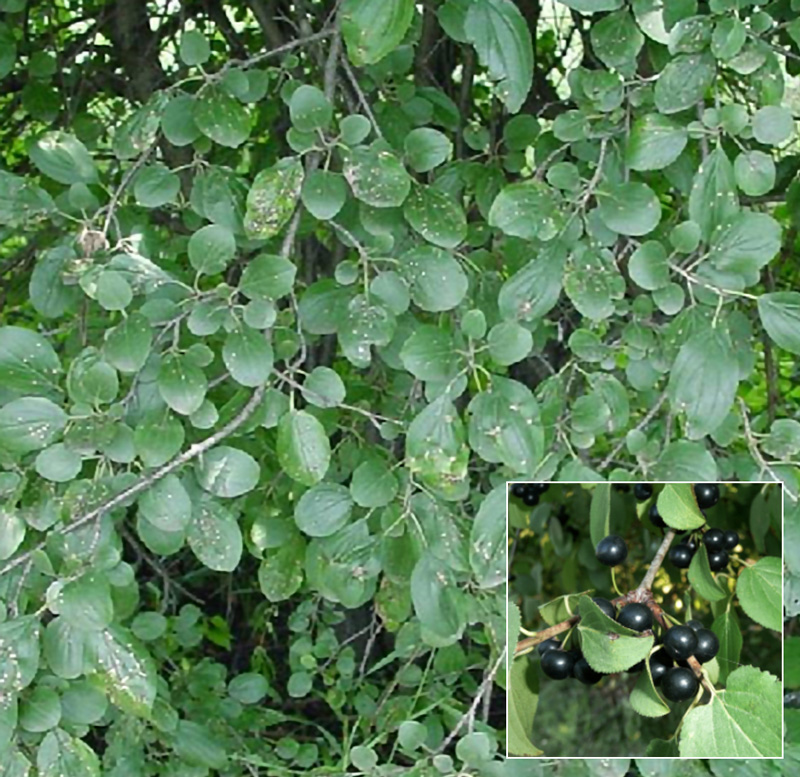
Plant Characteristics
Height:
up to 22’
Stem:
Up to 10” wide, brown to gray bark with rough texture, inner bark is yellow
Leaves:
Oval, jagged toothed, rounded and pointed at tips, dark, glossy green
Flower:
4 petals, yellow-green, dark black fruit ¼” in fall
Bloom Time:
June to JulyBuckthorn stays green until late fall while most deciduous leaves have fallen. It can overtake forest understories and make it hard for animals like deer to travel through. By shading and choking out native species, it also promotes rodent habitat which can lead to negative effects in the natural food chain and overall pest problems.

Hand Pull
Hand pulling is effective for small populations. A weed wrench may be helpful.

Spot Spray
Herbicide is recommended as it has been the most effective. It is best to cut the plant close to the ground and spray with herbicide.
Cultural Plant Alternatives:
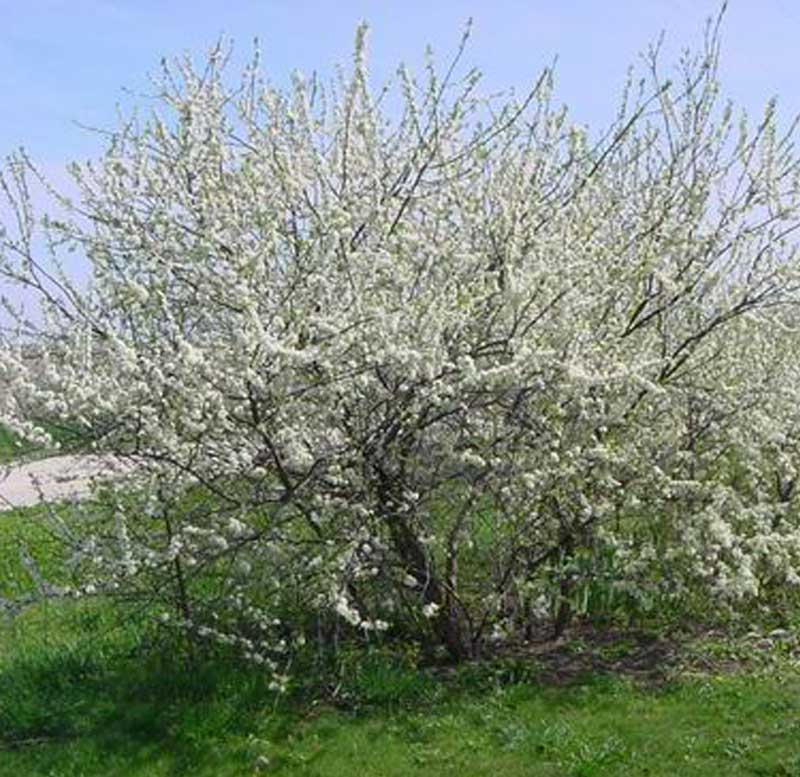
Wild Plum
The plum tree resembles buckthorn but has differences in its gray to brown bark. A cut branch on buckthorn will reveal orange bark that the plum tree does not possess. The plum trees spreads quickly underground and bears fruit edible to humans and animals.
Hackberry
The hackberry varies in size from a shrub to a tree. It tolerates wind and acidic soil well with full sun. The berries are often eaten by wildlife and can be dried for human use. The dried berries are often pounded to use as a condiment for meat.