Purpose
The purpose of this website is to provide the Tribal Community with information on invasive plant species that are a threat to the natural environment they live in. Each section provides an overview of how to identify and manage an invasive plant species. There are suggestions on what to plant in place of invasive species and the benefits they offer the local ecosystem. By following these guidelines, community members can reduce the threat of invasive species and contribute to the biodiversity (variety of life) of TribalLands.
Introduction
Invasive plants are not native to the local environment, and once they are introduced, can reproduce and spread causing harm to the environment, economy, or human health. They are typically spread, unintentionally, through human activity. People and goods travel around the world quickly, carrying unintended species withthem. Since invasive plants are aggressive, they often out competenative plants and cause drastic changes to the local ecosystem. Wildlife that is native to the area depend on native plants and maybe forced to adapt, move out, or die due to insufficient food sources and shelter. Many native plants rely on one another to alter soil chemistry and promote a fertile environment in which to grow.
Invasive plants spread through the dispersal of their seeds by wind, water, and animals. Some spread through an interconnected root system, through dumping of yard waste, or are transported by cars, machines, and even clothing. One of the most difficult things about invasive plants is predicting which will become aggressive and take over an area. The key to reducing the risk of invasive plants is to be able to identify and manage them in your own backyard.
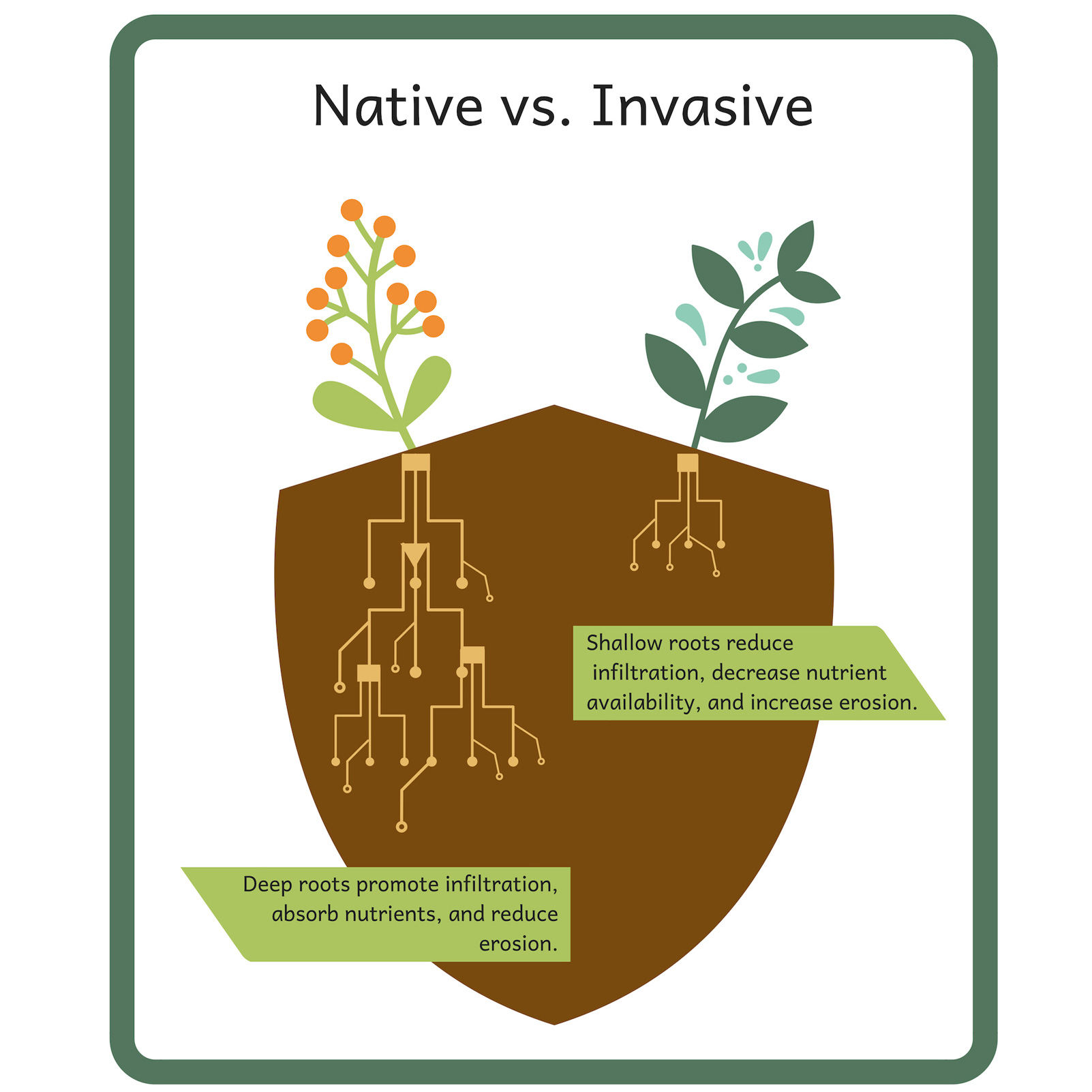
Native plants require minimal up keep because they have deep rootsystems to acquire nutrients and water. During a rain event, native plants are able to intake more water than invasive plants. This allows them to withstand longer periods of drought and to hold soilin place to reduce erosion. Native plants attract native pollinators like bees and butterflies. Pollinators are important to continue the growth of agricultural and native plants. By reducing native plants, there are fewer pollinators which will decrease biodiversity and canlead to a reduction in crop yields.
What can you do?
- When purchasing plants, be aware of species that are restricted both regionally and federally.
- Be able to verify the plant identification when purchasing plants.
- Consider using plants from nurseries that provide native plant options.
- Monitor your yard for invasive species.
- Learn to identify invasive and native plants.
- When disposing of plants with the potential of spreading, completely freeze or dry the plant to kill them and do not add to household compost (as seeds may survive and redistribute).
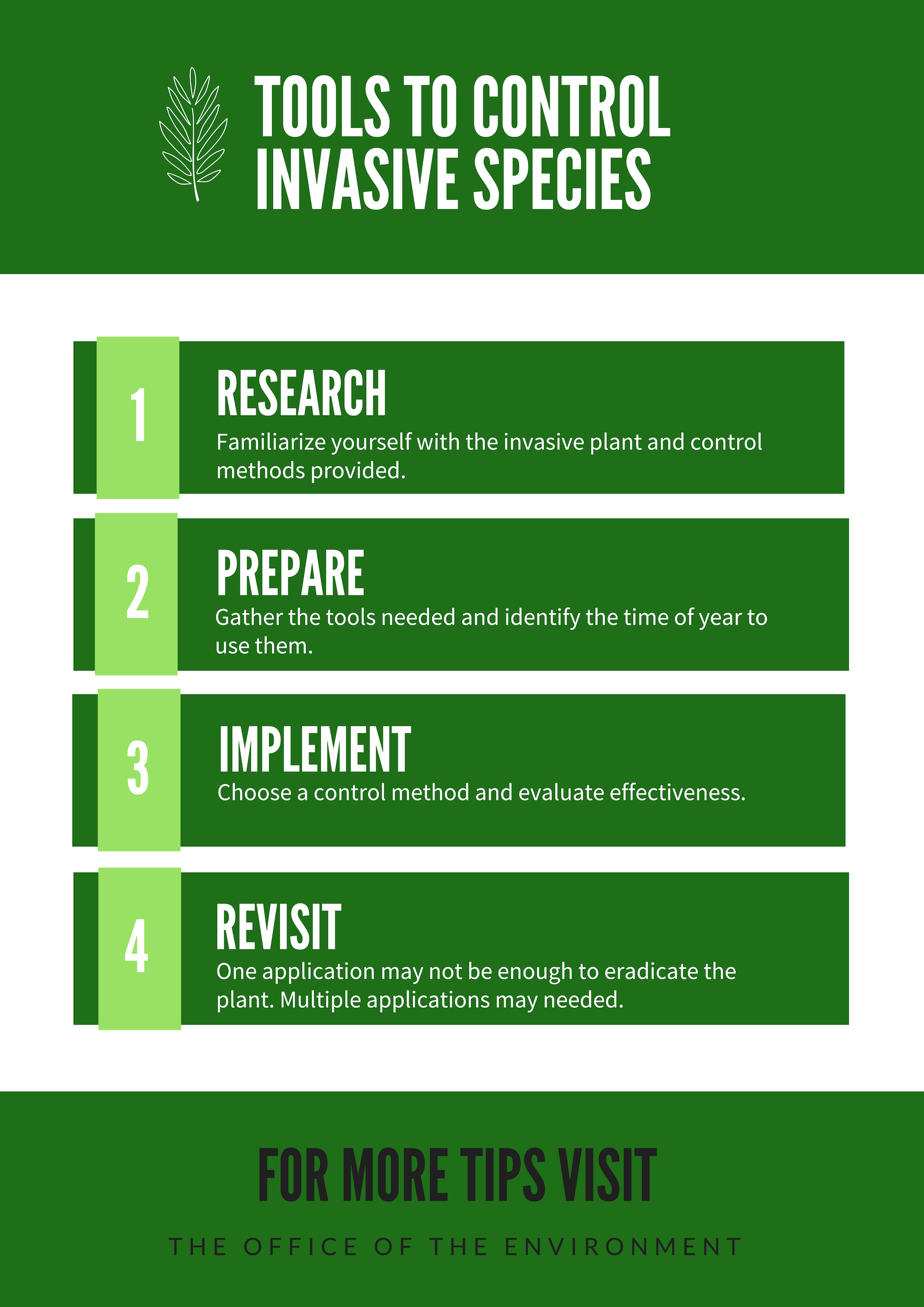
Management Techniques
Prevention:
This is the most effective method to reduce the risk of invasive plants by not introducing non-native plants into a new area. Clean vehicles and equipment of invasive plants and seeds. Decrease soil disturbances in construction and maintenance activities. Introduce a healthy plant community and use certified weed-free seed mixes. Contain known infestations to reduce the spread of invasives.
Mechanical Control:
Mechanical control typically refers to mowing or mechanical cutting (chain saw, brush cutter, etc.). Timing is important to limit seed production and spread. They must be removed close to the ground before the plant goes to seed in order to make this method effective. It will not always kill the plant but will reduce the seed production for that year.
Manual Control:
Hand pulling or digging are forms of manual control. Manual control works well for removing a single plant or small infestations. Be aware that some invasive plants spread by their roots so it is important to pull all roots otherwise the size of infestation may increase. This method works best in moist, loose soils to pull up shallow rooted plants.
Chemical Control:
Various herbicides are approved to use on invasive plants and can be the most effective when properly applied. The type of herbicide to use will vary depending on species. Make sure to use the correct application to eradicate the plant. Glyphosate is the most common herbicide used (sold under the name “Roundup”) and can be found at local hardware stores. It is best to wear protective equipment when using herbicides such as a face mask, rubber gloves and boots, and clothing free of holes to prevent the chemicals from touching your skin. If the herbicide leaves the site bare, be sure to revegetate the area with native plants to prevent invasive plant regrowth. Avoid using chemical control near waterways and on steep slopes to prevent runoff and contamination of water sources.
Organic Control:
Using organic methods will reduce the use of harmful chemicals in your garden or yard. Though organic methods have been less effective than others, it does not mean they will not work on your infestation. Boiling water and vinegar has been known to work on less noxious weeds. Using a tarp or can to cover the invasive plant will choke it out. Sometimes a combination of control methods are needed. Experiment with what works best for your situation.
Acknowledgments
This website would not have been completed without the collective knowledge and passion of Deb Dirlam from the Lower Sioux’s Office of the Environment. This publication was also made possible, in part, by the Bureau of Indian Affairs through an invasive species management grant. Ultimately, this website was realized through the Lower Sioux Indian Community’s Tribal Council and their desire and support to actively preserve their traditional lands.
All rights reserved. No part of this website may be used or reproduced without the written permission of the Lower Sioux Indian Community Office of the Environment. The information in this website was researched, compiled, and written by Kyle Herdina and Abbey Nicewander of Native Lands and Waters. Although the authors have exhaustively researched all plants to ensure accuracy of the information contained in this website, they assume no responsibility for errors, inaccuracies, omissions or any other inconsistencies herein.